Colombia Earthquake: From Donations to Rescue Efforts, the Nation Mobilizes to Aid Affected Regions
Follow our coverage of the earthquake in Colombia: between donations and relief dispatch, the country mobilizes to help affected regions. News from Société Flash.
International news is often marked by sudden tragedies that demand rigorous media coverage. Last Monday, a devastating magnitude 7.4 earthquake violently struck western Colombia. The consequences of this natural disaster are particularly severe. Nearly 48 hours after the initial tremor, the provisional death toll stands at at least 216 dead, with more than 1,600 injured. Faced with this emergency, our news portal Société Flash is mobilizing to keep you informed. We analyze the Colombia earthquake: between donations and dispatching relief, the country mobilizes to aid affected regions. Rescue teams continue to tirelessly scour the rubble, searching for individuals still trapped under the debris.
Real-time information is an absolute priority for our editorial team. Under the direction of experts like Raphaël Graven, we make sure to provide verified data. In a context where misinformation circulates rapidly, reliable reporting becomes vital. Readers need to understand the scale of the destruction and learn how solidarity is being organized on the ground. That is why Société Flash is committed to delivering a comprehensive analysis of this major humanitarian crisis.
Key Questions Surrounding the Crisis Management
When a disaster of this scale strikes, several questions immediately arise. How are local authorities managing the acute emergency? Which geographic areas have been hit hardest by the tremors? How is the civilian population taking part in the collective rescue effort? These questions are essential to grasp the full complexity of the ongoing situation. As a leading media outlet, Société Flash strives to provide clear and precise answers.
The primary urgency naturally remains the search for survivors. First responders are working under extremely precarious conditions, with seismic aftershocks constantly threatening their rescue operations. Furthermore, the issue of supplies is becoming increasingly critical. Road infrastructure has often been shattered by the tremors, making the delivery of humanitarian aid particularly challenging. It represents a major logistical hurdle for all organizations operating on the ground.
Finally, we must consider the long-term impact on local communities. The material destruction is massive and traumatic, and reconstruction will undoubtedly take years. However, the current outpouring of generosity demonstrates the remarkable resilience of Colombian society. Just as we cover every tragedy in Belgium or elsewhere in the world, we are following this disaster with the utmost attention. The goal is to shine a light on concrete actions that save lives every single day.
Colombia Earthquake: Between Donations and Relief Efforts, the Nation Mobilizes to Aid Affected Regions
National solidarity organized with impressive speed across the country. In Medellín, the collective drive is especially visible along the main highway, where a large multi-story warehouse serves as the central hub for donations. This building houses the food bank managed by the Saciar Foundation. Since Monday, a steady stream of vehicles has been arriving to drop off provisions. On Tuesday, August 11, Colombian citizens turned out in large numbers to offer their support.
Among these generous donors was Wilson Trujillo, who arrived on site with his 4x4 fully packed. His trunk was filled to the brim—a powerful symbol of this grassroots mobilization. He even showed reporters that his passenger seat was overflowing with packages. This involvement is a deeply touching family endeavor; his son, a practicing dentist, runs a foundation called "Creating a Smile."
Wilson's entire family is part of this meaningful charitable initiative. These contributions stem from a coordinated collective family effort. After unloading his first cargo, Wilson Trujillo made a firm promise to return quickly with more supplies: "We're bringing a carload of donations today and coming back tomorrow," he stated with emotion, emphasizing that this effort is dedicated to all those who are currently suffering.
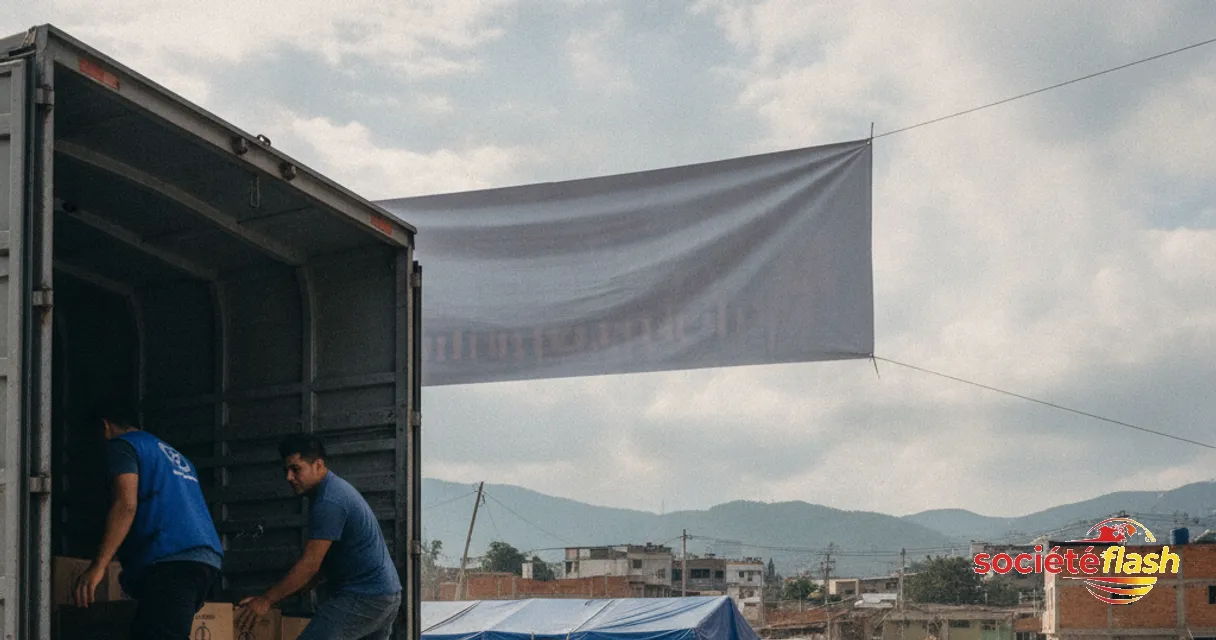
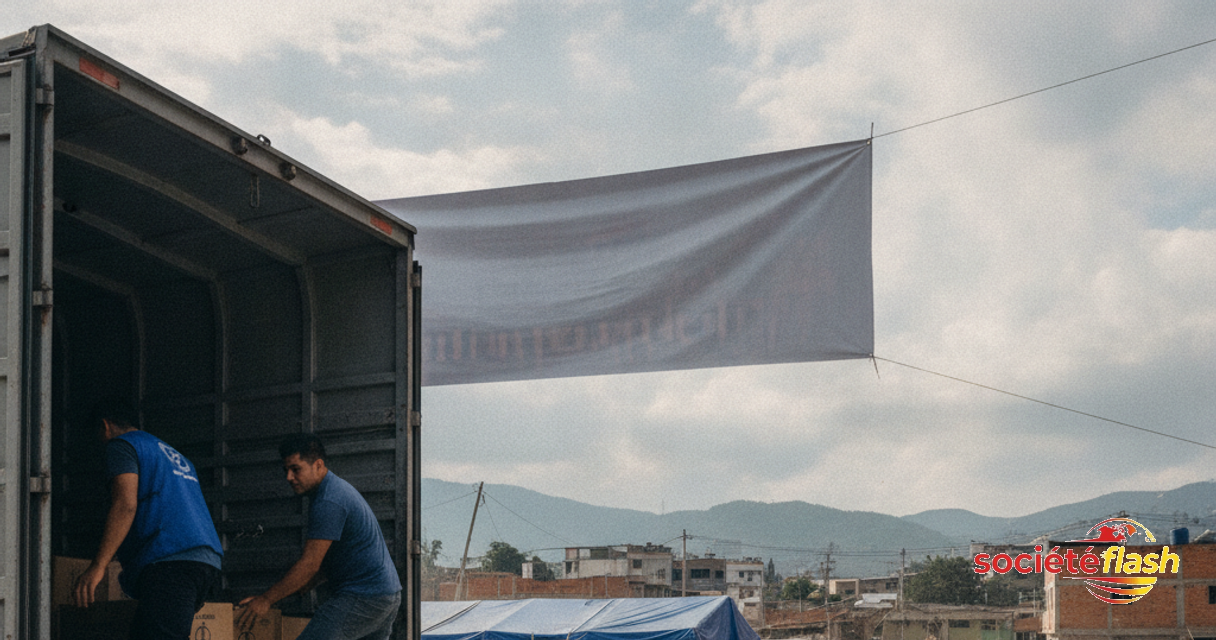
In his view, pulling together is essential during such tragic times. This mindset perfectly reflects the determination of the Colombian people in the face of adversity. In just 48 hours, this single collection hub gathered 35 tonnes of goods from across the city. Heavily loaded trucks are scheduled to depart this Wednesday, August 12, heading straight for the disaster zones to distribute this much-needed aid.
Best Practices for Structuring Humanitarian Aid
Spontaneous generosity requires rigorous organization to be truly effective. Inside the Medellín warehouse, donations are first gathered in a large sorting room. Numerous volunteers carry out meticulous categorization work, methodically organizing goods into standardized emergency kits. This structured approach ensures that every affected family receives balanced, practical assistance.
Gloria Arango plays a pivotal role in this extensive logistics operation. She precisely coordinates the "social market" division of the Saciar Foundation. Her expertise helps streamline the distribution of available resources. She carefully detailed the exact contents of each survival kit—transparency that is essential for maintaining donor trust and ensuring ground-level efficiency.
For basic sustenance, the kits are exceptionally complete and nutritious. Here are the core items included in the food parcel:
- Generous portions of white rice for carbohydrate intake.
- Chickpeas to ensure a solid supply of plant-based protein.
- Lentils and dried beans, which are easy to store.
- Sugar and salt to season food and sustain the victims' energy levels.
- Cooking oil, an indispensable staple for meal preparation.
- Various canned goods providing long shelf life without refrigeration.
Personal hygiene is by no means overlooked in this holistic approach. Kits include sanitary napkins, toothbrushes, and toothpaste. Mouthwash is sometimes added as well for optimal hygiene. Finally, toilet paper and drinking water complete these vital care packages. This rigorous structure offers a true masterclass in humanitarian crisis management, illustrating the best practices of the non-profit sector.
List of Isolated Regions: A Comparative Damage Assessment
Several major cities across western Colombia were hit hard. Cali and Quibdó are among the most severely impacted urban centers. The cities of Manizales and Pereira have also reported widespread property damage. However, the situation is even more dire in the surrounding rural sectors. Mountainous areas suffer from geographic isolation, which greatly complicates rescue operations.
The account shared by Dimitri, a local business owner, is particularly chilling. He manages a hotel in Filandia, about an hour's drive from the epicenters. He describes a mountainous region where transportation links are severely damaged, making existing roads virtually impassable for standard vehicles. Many villages now find themselves almost entirely cut off from the outside world.
Dimitri described traffic conditions in these areas as truly "apocalyptic." Major landslides have blocked primary access routes in this part of Colombia. Power supply remains highly erratic, and modern communication networks are down in several municipalities. These outages further isolate vulnerable residents who are desperately awaiting help.
Towns such as Quimbaya illustrate this acute geographic distress. They remain heavily cut off, leaving residents unable to reach emergency services. In such remote pockets, helicopter interventions become indispensable. As a global news platform, Société Flash analyzes these complex logistical challenges. Just as we unpack every military escalation in Ukraine, we monitor critical infrastructure developments here. Accurate reporting is key to directing relief where it is needed most.
International Aid and the Decisive Action of the European Union
In the wake of this massive South American disaster, the international community has stepped up. On Wednesday, major political announcements emerged from Europe. European Commission President Ursula von der Leyen took to the public stage to formally announce the release of a substantial emergency fund for Colombia.
This immediate financial package amounts to two million euros mobilized by the EU to quickly support affected Colombian communities. In an official post on X, she reaffirmed unwavering solidarity, stating that the EU stands ready to help wherever possible. This European assistance is being rolled out as search-and-rescue operations continue around the clock.
Brussels' commitment extends beyond purely financial aid. As early as Monday, the European Union anticipated the technological needs of rescue teams by activating its advanced satellite service, Copernicus. This state-of-the-art space tool is designed to facilitate disaster response by mapping damage from orbit with remarkable precision.
Satellite imagery helps ground crews identify blocked roads and optimize delivery routes for trucks carrying Saciar Foundation supplies. International media outlets providing detailed coverage of this tragic event confirm the importance of these collaborative efforts on the ground. Global crises, such as the crisis in the Middle East, show that international cooperation remains our strongest response to disasters.
FAQ: Understanding the Situation and the Aid Provided
What is the current human toll of this disaster?
Nearly 48 hours after the powerful magnitude 7.4 earthquake, the figures remain devastating. The official provisional death toll stands at at least 216 across the country. Health authorities have also recorded over 1,600 injured individuals requiring urgent care, while search crews continue to look for survivors beneath the rubble.
How are donation collections being organized?
Colombian solidarity has rallied around highly efficient local initiatives, notably in Medellín. The Saciar Foundation converted a large warehouse into a temporary food bank. In just 48 hours, volunteers gathered more than 35 tonnes of goods, which are sorted and assembled into comprehensive emergency care kits.
Which regions are suffering the most from isolation?
While major cities like Cali, Quibdó, Manizales, and Pereira sustained heavy damage, it is the surrounding mountain regions that most concern rescue workers. Towns like Quimbaya are largely cut off due to massive landslides. The lack of electricity and communication networks severely hinders local damage assessments.
What type of international aid has been announced?
The European Union responded swiftly by pledging financial and technological support. Ursula von der Leyen confirmed two million euros in emergency funding. Additionally, the EU's Copernicus satellite service was activated to provide high-precision mapping of disaster zones for emergency workers.
Conclusion: Stay Informed with Société Flash
The situation in Colombia continues to evolve by the hour, demanding constant media vigilance. The combined efforts of local citizens, non-profits like the Saciar Foundation, and the international community are extraordinary, reflecting an unyielding determination to overcome this tragedy. Nonetheless, logistical challenges in isolated mountain regions remain an urgent concern.
In such an uncertain climate, access to verified, up-to-date reporting is paramount. Our news portal is dedicated to bringing you insightful analysis and trustworthy coverage. Led by Raphaël Graven, our editorial team sifts through rumors to deliver the facts. We firmly believe that quality journalism is an essential public service, helping guide humanitarian aid and informing audiences worldwide.
To follow the development of this crisis and other major world events, stay connected with us. Just as we follow tensions in the Middle East, we remain focused on Latin America. Subscribe to the Société Flash daily newsletter today so you never miss an update, and visit our website regularly for in-depth reporting from our dedicated newsroom.
Also Read