Grande Prairie Students Protest Teacher's Post
Grande Prairie high school students stage walkout against teacher's post disputing Kamloops graves. Discover the event's social impact.
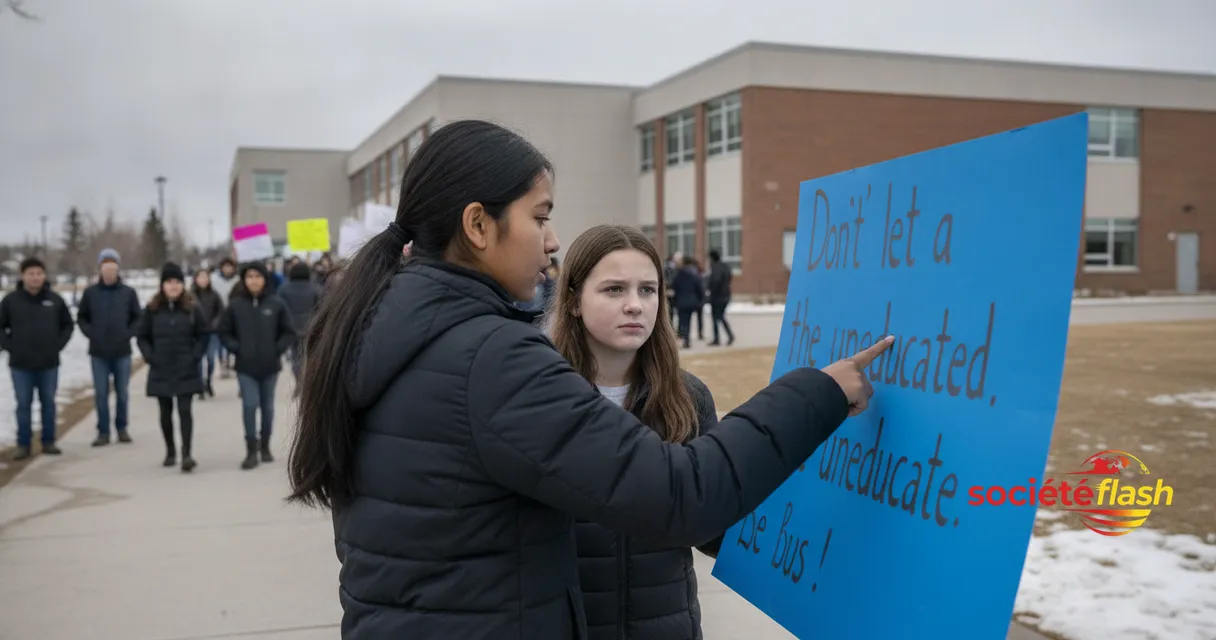
On October 13, 2026, an impactful event unfolded in Grande Prairie, Alberta, as approximately 120 students from St. John Paul II High School organized a walkout. The protest was in response to a controversial social media post by their social studies teacher, Amy Davidson. By sharing a post from Maxime Bernier, she questioned the authenticity of the graves discovered at the former Kamloops Indian Residential School. This action sparked a strong reaction among students, some of whom carried signs with messages like "Don't let the uneducated teach us." This article delves into the implications of this event and how it mirrors broader trends in reconciliation awareness.
Background of the Protest Movement
On Truth and Reconciliation Day, Amy Davidson posted a message on social media denying the discovery of graves at Kamloops and calling claims of genocide a "hoax." This post was seen as a direct attack on reconciliation efforts and the acknowledgment of past atrocities in Canada. In response, students organized a walkout to express their disagreement and support historical truth. This act of civil disobedience was widely supported by the local community, demonstrating the collective power of young voices in driving social change.
Social Implications of the Walkout
The Grande Prairie walkout is part of a larger context of youth-led social movements. As discussed in our article on the role of youth in social change today, these actions emphasize the growing importance of young people in defending truth and justice. By challenging established narratives, young activists are compelling institutions to reassess their positions and practices. This is crucial in an era where misinformation can easily undermine progress toward equality and intercommunity understanding.
Strategic Opportunities for Educators
For educators, this event offers a valuable opportunity to rethink the teaching of history and social studies. Incorporating a truth and reconciliation perspective into curricula can not only enrich the educational experience but also strengthen social cohesion. Education must address difficult subjects honestly and openly, preparing students for a world where complexity and nuance are inevitable.
Integrating New Educational Content
Schools can incorporate content about residential schools and reconciliation policies into their programs. This includes:
- Educational visits to relevant historical sites
- Interactive workshops with Indigenous communities
- Lectures and discussions with experts in history and Indigenous rights
How Société Flash Can Support This Change
At Société Flash, we are committed to promoting informed and accurate information. Our content creation and distribution services are designed to help educational institutions and organizations engage meaningfully with their audiences. We offer resources to effectively integrate diverse perspectives and promote constructive dialogue on important societal issues.
Utilize Our Services for Lasting Impact
Our experts can help you develop communication strategies that value inclusion and truth. To learn more, contact us today and discover how we can collaborate to create positive and lasting change.
FAQ
Why did the walkout occur in Grande Prairie?
The walkout was organized by students in response to their teacher's controversial social media statements, denying the findings of graves at Kamloops.
What messages were on the students' signs?
Signs included messages like "Don't let the uneducated teach us" and "The mass graves at Kamloops are real," highlighting their disagreement with the teacher's statements.
How does this event fit into the reconciliation movement?
It illustrates the commitment of young people to defend truth and promote reconciliation by confronting narratives that downplay Indigenous suffering in Canada.
What role do young people play in social change today?
Young people are at the forefront of social justice movements, using their voices to encourage meaningful changes and challenge the status quo.
How can I support these educational initiatives?
You can support these initiatives by staying informed, participating in educational events, and encouraging open discussions about history and reconciliation.
For the latest news and initiatives, visit our News section for more details and analyses.
Also Read