Raphaël Glucksmann's Stand Against Mélenchon
Explore Raphaël Glucksmann's bold stance against Jean-Luc Mélenchon and its impact on the French left's political dynamics in 2026.
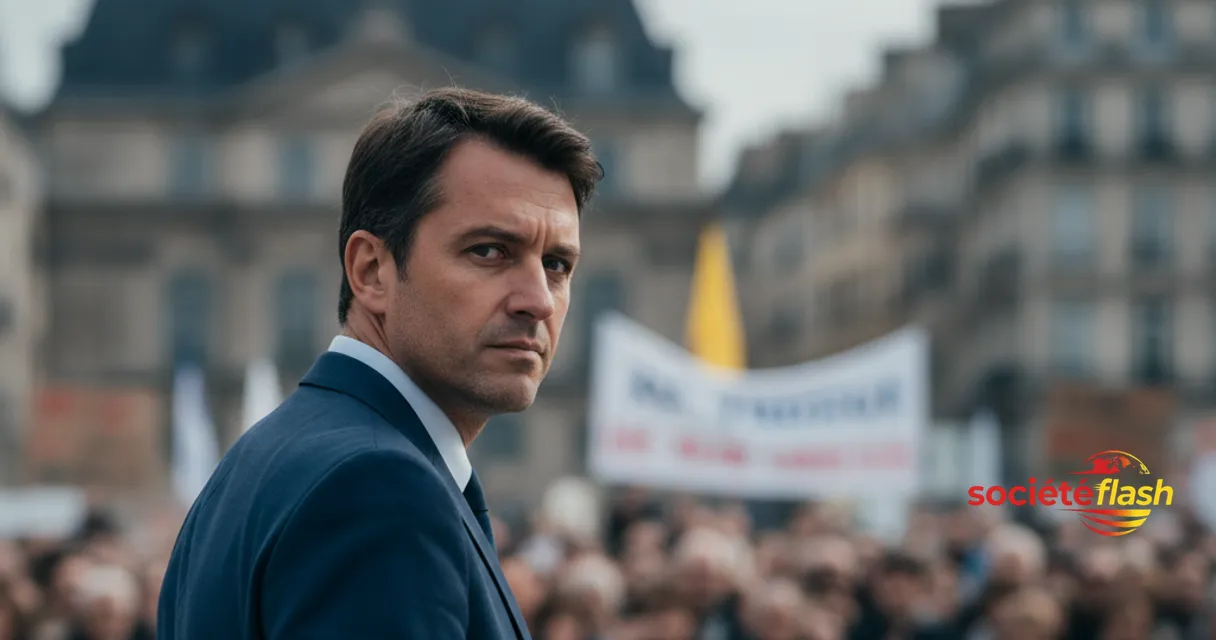
In the current French political landscape, one article stands out: "The Man Who Chose to Say No to Jean-Luc Mélenchon." This piece delves into the intricate dynamics within the French left, where alliances are forged and broken depending on polls and personal ambitions. The central figure in this narrative, Raphaël Glucksmann, emerges as a dissenting voice against Jean-Luc Mélenchon, offering a bold alternative for his political camp. But why is Glucksmann's decision to reject Mélenchon so significant?
Raphaël Glucksmann: A Distinct Political Journey
Raphaël Glucksmann, a rising figure in French politics, recently announced his candidacy on TF1, positioning himself as an independent candidate firmly opposing an alliance with Jean-Luc Mélenchon, the leader of La France Insoumise (LFI). Although risky, this decision reflects his desire to clarify his position and stand out. Glucksmann is willing to participate in a primary against established figures like Olivier Faure and potentially François Hollande, but his stance is firm: "If I win this primary, there will never be an agreement with Jean-Luc Mélenchon again."
This commitment underscores his intention to offer a different political vision, distancing himself from strategic alliances often criticized for lacking ideological consistency. Glucksmann aims to move away from Mélenchon's dominant shadow to rally around a more unified and coherent ideology.
The Influence of Polls on Political Alliances
Polls play a crucial role in political strategy. Currently, Mélenchon is polling at 16 to 17 percent, while Glucksmann is around 10 to 11 percent. This significant difference influences political decisions and potential alliances. The left, often described as "irreconcilable," seems ready to reconsider its positions in light of these numbers.
This dynamic is even more evident when observing how some parties, like the ecologists and socialists, position themselves in relation to Mélenchon. Past declarations criticizing his leadership seem to fade in the face of opportunities to gain visibility and influence, illustrating the complexity of strategic choices in today's political landscape, where alliances are often driven by pragmatic considerations rather than firm convictions.
The Challenges of Uniting a Divided Left
For Glucksmann, the challenge is twofold. He must not only convince left-leaning voters of his vision but also navigate a fragmented political landscape where alliances are both essential and difficult to achieve. His promise not to ally with Mélenchon could resonate with an electoral base seeking clarity and integrity.
Comparing Political Approaches
This situation highlights two emerging political approaches: Mélenchon's, advocating for broad coalitions to counter the Rassemblement National, and Glucksmann's, which favors a clear separation and more ideologically coherent alliances.
- Mélenchon: Prefers broad alliances, even if they involve ideological compromises.
- Glucksmann: Values clarity and ideological integrity, even at the cost of a potentially smaller electoral base.
This difference in strategies underscores the internal tensions within the French left. On one side, the goal is to maximize victory chances; on the other, it's about maintaining ideological consistency, which could strengthen voter trust in the long term.
FAQ
Why does Raphaël Glucksmann refuse to ally with Jean-Luc Mélenchon?
Raphaël Glucksmann seeks to clarify his political stance by avoiding ideological compromises that an alliance with Mélenchon might entail. He aspires to a unified left centered around shared values, without diluting its fundamental principles.
What are the major challenges for Raphaël Glucksmann in this campaign?
The main challenges for Glucksmann include standing out in a primary, gathering support within a fragmented left, and convincing voters of his project despite less favorable polls compared to Mélenchon.
How do polls influence political decisions in this context?
Polls, reflecting public support, often drive parties to reconsider their alliances and strategies. In Glucksmann's case, his lower score compared to Mélenchon might push him to redouble efforts to convince and rally beyond current figures.
Conclusion and Call to Action
In this complex political context, Raphaël Glucksmann positions himself as a serious and thoughtful alternative within the French left. His decision to say "no" to Jean-Luc Mélenchon is a bold move that could lead to a redefinition of political alliances in France. To keep up with the evolution of this situation and other political news, visit Société Flash, your go-to news portal. For any questions or comments, feel free to contact us. Together, let's stay informed and engaged.