Total Solar Eclipse: Millions of Europeans Witness Rare Astronomical Phenomenon
Relive the total solar eclipse as millions of Europeans witness this rare astronomical phenomenon with Société Flash. Discover our exclusive coverage.
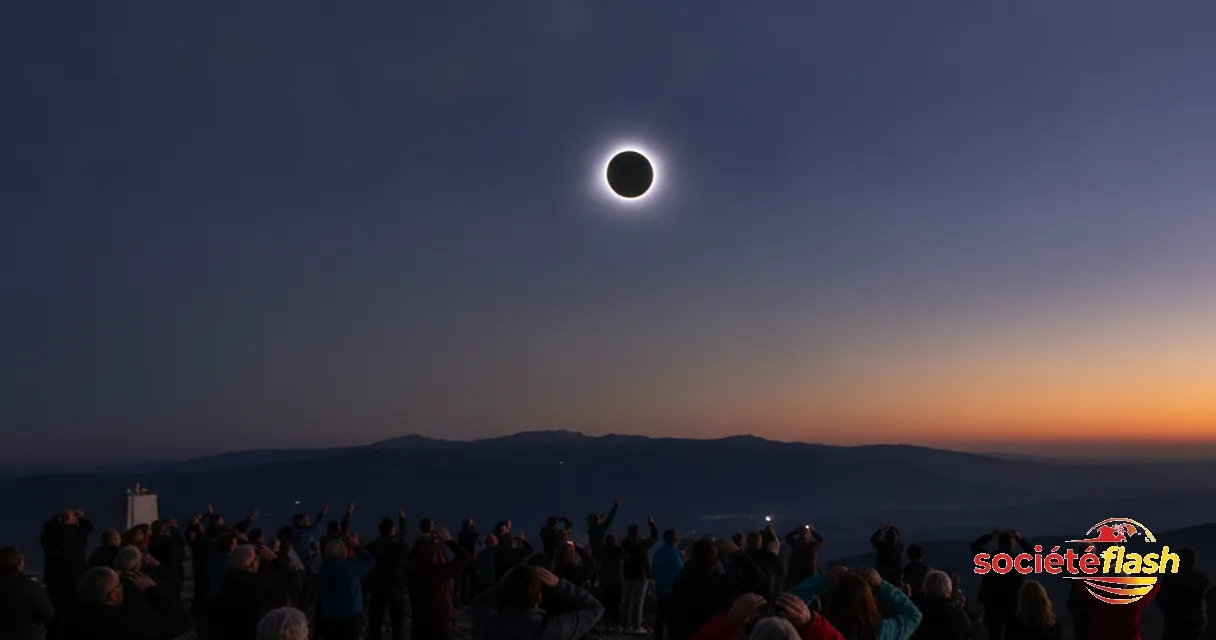
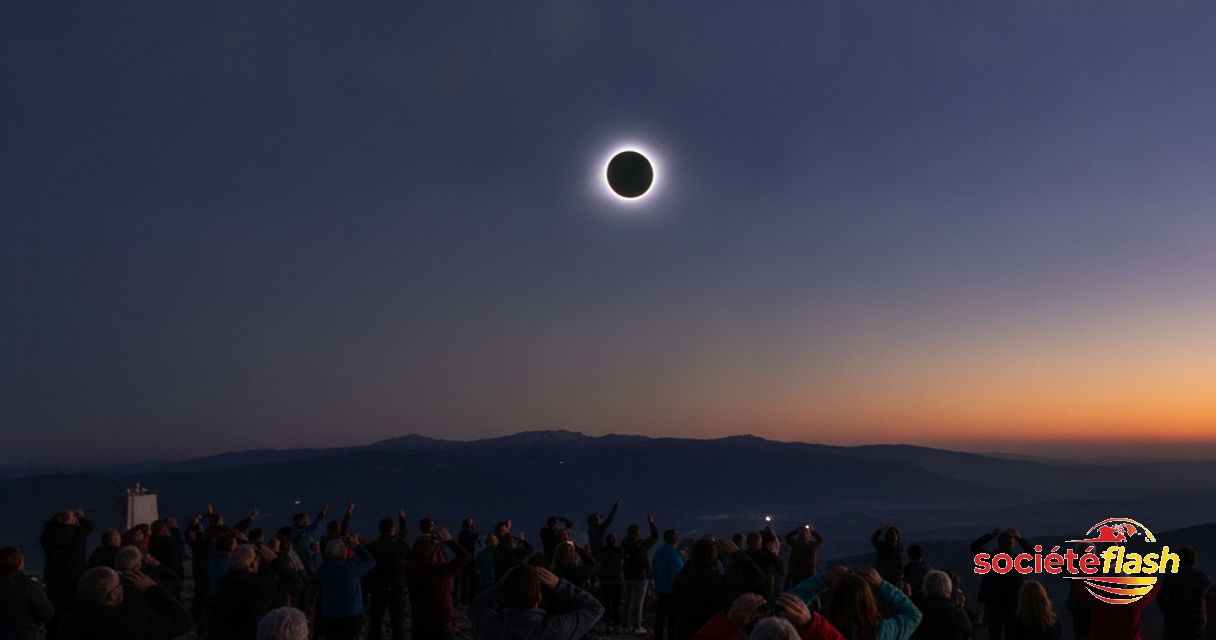
Tuesday, August 12 will go down in history as a memorable day for astronomy. On that day, a mesmerizing darkness swept across the daytime sky. As a leading news portal, Société Flash is committed to delivering in-depth coverage of major world events, and this Tuesday's celestial spectacle is no exception. For the first time since 2006, the European continent witnessed a perfect alignment between the Sun and the Moon. The result was nothing short of breathtaking. Today, we break down the total solar eclipse that millions of Europeans gathered to behold. This extraordinary event sparked unprecedented excitement, drawing massive crowds ranging from astronomy enthusiasts to curious onlookers.
Our editorial team brings you an immersive look at this unforgettable experience. We examine its spectacular geographical path, its major scientific impact, and the collective emotion it sparked across several nations. At Société Flash, we believe quality reporting helps us better understand our world. That is why we have gathered all the essential insights to let you relive this magical moment.
Analysis of the Total Solar Eclipse: Millions of Europeans Witness Rare Astronomical Phenomenon
The lunar shadow's journey began in remote polar regions, starting with the onset of the solar eclipse in the far reaches of the Russian Arctic around 5:00 p.m. UTC. At that exact moment, the Moon began to obscure the solar disk. The projected shadow then raced along a massive arc, first traversing Greenland's icy expanses before sweeping across Iceland's volcanic terrain. This impressive trajectory covered a vast stretch of the Northern Hemisphere.
In Iceland, weather conditions were unfortunately less than ideal. Overcast skies and scattered rain greeted observers, with thick cloud cover obscuring the horizon. Yet, this did not dampen the spirits of the thousands of onlookers gathered across the island. Even without a clear view of the Sun disappearing behind the Moon, they experienced a striking sensory shift as daylight suddenly plunged into total darkness. According to precise calculations from the Paris Observatory, totality lasted 1 minute and 14 seconds over the capital, Reykjavik.
Spain at the Epicenter of Daytime Darkness
Spain undisputedly offered the most magnificent spectacle, hosting the largest concentration of observers for this total eclipse. The umbra swept diagonally across Spanish territory, starting its overland path on the northern Atlantic coast before concluding over the Mediterranean Sea around 6:30 p.m. UTC. This band of darkness stretched from Oviedo to Palma de Mallorca, passing through Burgos. In northern Spain, totality lasted approximately 1 minute and 50 seconds.
Collective Excitement in Lodoso and Catalonia
Excitement swept across Spain in recent days, marking the country's first total solar eclipse in over a century. International tourists and local residents gathered in droves across Catalonia. About 500 kilometers to the west, the small village of Lodoso, near Burgos, witnessed unforgettable scenes. Hundreds gathered in sun-scorched fields, breaking into cheers and enthusiastic applause the moment darkness fell.
This moving atmosphere was widely captured on smartphones as onlookers snapped photos and recorded video of totality. The light faded gradually, first giving way to an eerie amber glow reminiscent of dusk, before settling into pitch-black totality accompanied by an almost reverent silence. This striking yet fleeting phenomenon lasted anywhere from a few seconds to just under two minutes across the path of totality, which spanned from Galicia and Asturias to the Balearic Islands.
Scientific Foundations and Mysteries of the Solar Corona
Beyond the public wonder, this event holds tremendous scientific value. The Moon's alignment with the Sun bathes the landscape in an uncanny, purplish gloom. During totality, ambient temperatures drop noticeably as the air rapidly cools. These sudden environmental shifts directly affect wildlife: disoriented by the unexpected darkness, animals often display nighttime behaviors and seek shelter.
Astronomically, the highlight of the event is the emergence of the solar corona—a glowing halo encircling the darkened lunar silhouette. This alignment provides researchers with a rare, unobstructed view of the Sun's outermost atmospheric layer. Scientists study the corona to unlock mysteries surrounding solar winds and better understand the sun's complex magnetic field, research vital for space weather forecasting.
A Global Partial Spectacle
While totality lasts only minutes, the overall event unfolds over roughly two hours. Outside Spain's narrow path of totality, millions observed a partial eclipse. Observers across France, Canada, northern West Africa, and parts of the United States caught a glimpse of this cosmic alignment, underscoring the truly global reach of the event.
Key Questions and How to Stay Informed
An event of this scale naturally brings up several questions: How should one prepare for the next eclipse? Where can you find verified, real-time updates? In an era of rapid news cycles, relying on trusted journalism is essential. This is where Société Flash delivers. Powered by Krealo Media and guided by key voices such as Raphaël Graven, our newsroom provides thorough, reliable coverage across major topics.
Our focus extends well beyond astronomy. We cover global headlines with the same rigorous standard. Whether you want to understand why Israeli strikes in Lebanon threaten the truce with the United States, or follow record-breaking feats like the new single-day summit record on Mount Everest, Société Flash keeps you informed. We also investigate digital trends, including the latest viral scam sweeping Instagram, alongside major breaking news like the tragedy in Belgium involving a school bus struck by a train at a level crossing. Choosing Société Flash means choosing clear, comprehensive global reporting.
Key Observation Points at a Glance
To better visualize the path and scope of this rare phenomenon, here is an overview of the key observation areas across the Northern Hemisphere:
- Russian Arctic: The starting point of the eclipse, beginning around 5:00 p.m. UTC in remote polar regions.
- Greenland and Iceland: An arcing path across the North Atlantic; Reykjavik experienced 1 minute and 14 seconds of totality despite thick cloud cover.
- Northern Spain: Offered the longest duration of totality in Europe at approximately 1 minute and 50 seconds.
- Spanish Path: A diagonal sweep spanning from Galicia through Asturias, Oviedo, and Burgos down to Palma de Mallorca.
- Partial Eclipse Zones: Wide visibility across France, Canada, the United States, and northern West Africa over roughly two hours.
FAQ: Everything You Need to Know About the Eclipse
When did the solar eclipse begin?
The Moon's shadow first touched down on Tuesday, August 12, in the far northern reaches of mainland Russia around 5:00 p.m. UTC. It then traveled rapidly across the Northern Hemisphere, crossing Greenland and Iceland before reaching continental Europe.
Which European regions had the best views?
Spain enjoyed prime viewing conditions, marking its first total solar eclipse in over a century. The path of totality crossed the country diagonally from the northern Atlantic coast to the Mediterranean, offering millions an unforgettable spectacle until around 6:30 p.m. UTC.
What physical changes occur during totality?
During totality, the environment changes dramatically. Daylight dims into an eerie purplish gloom, the air cools rapidly, and temperatures drop sharply. These sudden changes frequently cause local wildlife to become disoriented and seek shelter.
Why is this event significant for scientists?
Totality reveals the solar corona as a brilliant halo around the Moon, providing astronomers with an ideal opportunity to study the Sun's outer atmosphere. This research helps unravel solar wind dynamics and improves our understanding of solar magnetic fields.
Conclusion: Stay Connected with the Latest News
The passage of the lunar shadow across Europe delivered an extraordinary natural display. From the Russian Arctic to the Mediterranean coast, this event highlighted the wonders of our cosmos while yielding valuable scientific insights. Société Flash is proud to bring you comprehensive coverage of this historic moment.
To keep up with major global events across science, world news, and culture, count on our team. Visit Société Flash regularly and subscribe to our newsletter to join an engaged community of informed readers!
Also Read